




In this mini-sode, Dannelle speaks with Theresa Wilbanks about some of the strategies she used to alleviate caregiving stress. You’ll learn some helpful and simple tools to integrate into your caregiving wellness routine.
Guest Links
- Website: Sustainable Caregiving
- Instagram Handle: @sustainablecaregiving
- Facebook: @SustainableCaregiving
- LinkedIn: Theresa Wilbanks
- Twitter: @SustainableCG
Additional Resources
- Check out The Caregiving Soul, Episode 6 for a ton of great self-care techniques!
- Setting boundaries: Sustainable Caregiving™: Boundaries
About Theresa Wilbanks
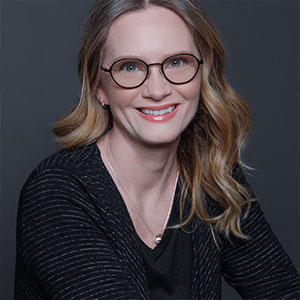
Theresa Wilbanks cared for her father until his passing at 99 years of age. During that time, she experienced the raging river of emotions that comes with caring for a family member. Overwhelmed and drowning, she navigated toward a more sustainable caregiving experience. Theresa founded Sustainable Caregiving and works with fellow family caregivers to help them navigate their caregiving journey. With humor and vulnerability, Theresa shares her story and strategies in her book, Navigating the Caregiver River: A Journey to Sustainable Caregiving.
Transcript
[00:00:00] [Music]
[00:00:06] Dannelle (Recorded): Hello and welcome to The Caregiving Soul. I’m your host, Dannelle LeBlanc.
[00:00:14] [Music Ends]
Read More
[00:00:14] In celebration for National Family Caregivers Month, we’re releasing two mini-sodes focused on strategies to create empowerment in our caregiving experience. Empowerment is rooted not in any particular source, but in our ability of to find what works both practically and emotionally.
[00:00:28] Today’s mini-sode, the 1st in our special series, is with Theresa Wilbanks who’s experienced the turbulent river of emotions so many of us struggle with while caring for her father, who passed away at 99. She’s the founder of Sustainable Caregiving and works with fellow family caregivers to help us navigate our caregiving journey.
[00:00:54] This conversation covers a critical question we need to ask and answer for ourselves: When we’re overwhelmed with the stressors of caregiving, how do we find tools and strategies to bring us back to a sustainable place?
[00:01:10] [Music]
[00:01:11] Let’s dive in!
[00:01:16] [Music Ends]
[00:01:16] Dannelle: What would you say are some of the strategies that helped you through?
[00:01:22] Theresa: So, when I got to a place where I was connected with resources that was a whole journey in and of itself. I still was struggling because it still felt so hard. And so, I wanted to understand why is this so hard? It doesn’t make sense that I’m having so much trouble with this, and it was the emotions. I did a deep dive into what is hard, and how can I make this better, because the way I felt was not sustainable. I was not going to be able to continue. It was a deep dive, trial and error, and tears and how they fit together.
[00:01:54] We talk about self-care and we talk about reimagining self-care as a caregiver, but it wasn’t enough for me to go on a run, because I would go on a run, I would ruminate on the challenges and the problems. I would come back in a worse place than when I left. I had to learn about mindfulness and when I did, and I learned about boundaries – boundaries are limits we set around, they can be physical limits, they can be emotional, and I was able to set boundaries. And when I went on that run, I was not going to think about the worries and I was going to be mindful.
[00:02:24] All of a sudden, the runs worked. I came back and felt refreshed and rejuvenated. And actually, because I was not worrying, I was solution oriented and things were coming to mind. So, that was amazing. Journaling was a strategy and that helped tremendously being able to get the thoughts out on paper. I was obsessed at one point I had three journals, and it was fantastic and they each had their own purpose.
[00:02:48] Dannelle: I love that you had a purpose for each one of your journals. Can you share with us what the purpose of each one of those journals was?
[00:02:59] Theresa: Sure. I had a journal. I, you know, I wanted to write down the anecdotes, all of it, between Dad and I, the things that happened that were funny, the things that happened that were frustrating. And I kind of wanted to keep that separate from my journal about things that weren’t specifically caregiving or our relationship. So, then I kept that and the journal for me, like when I would meditate, I might do a guided meditation, and I would learn something, or there would be something I wanted to explore more and so I would write it out and then I would write about it. So, that was journal number two.
[00:03:33] And then journal number three was my gratitude journal, which was completely broken in the beginning. It did not work. I struggled and struggled with it until I figured out that I needed to replenish my compassion reserves, my capacity for compassion. And all of a sudden it made sense. And I actually found gratitude, not just like, you know, in the evening thinking about what I was grateful for that day, but grateful for caregiving. And that was when the switch started to flip. I started to actually see that I can be grateful for caregiving and for all that it has brought me and has to offer.
[00:04:08] Dannelle: It’s so hard to be grateful [Laughs] for something that is so hard. And when we begin our journey caregiving, a lot of times we don’t even recognize what the role is, or the responsibilities, in order to put some of these strategies in place to help ourselves. What would you say are some of the more universal roles and responsibilities of a family caregiver that can help us to recognize our role?
[00:04:41] Theresa: Oh, that’s interesting that you say help us recognize our role because I didn’t connect to the term “caregiver”. I was just a “helper” and that was kind of the role, and these were my responsibilities. Well, then he had a stroke. He’s in the hospital. And I feel like at that moment, I connected to the term caregiver when I was handed that packet of papers from the social worker. And I’m like, “what is this?” “Well, these are some services you might need when your dad comes home”.
[00:05:06] I think connecting to the term caregiver is powerful because when we do that, we can accept that there are resources out there to help us. And we can accept that we’re gonna need support emotionally, you know, down the road, whether that’s a counselor, whatever that is, we can start to get those supports before we get burned out.
[00:05:23] Dannelle: It’s a process to define what support looks like and we’re doing the best that we can with the information and experience that we have.
[00:05:37] Theresa: We wanna do everything ourselves. And so, where do we get help? What type of help do we need? Logistically it’s possible for us to do everything, but it’s not sustainable and there’s a huge cost and it’s to your own health and wellbeing.
[00:05:52] You know, with 53 million caregivers out there, they are all feeling that there’s something wrong with that, because there’s so many folks who’ve been through it and then they, like me, look back and say, “it didn’t have to be that hard. If I had just known that these resources were there”.
[00:06:07] Dannelle: That disconnect from resources, not being aware that there is help, is a big part of what creates the logistical strain. You’re so right about that. It’s not that we don’t have the existing skills, or we don’t have the ability to figure it out, or to learn, it’s that we don’t even know it exists. [Laughs]
[00:06:31] Theresa: I mean, where do you start?
[00:06:34] Dannelle: So, Theresa, when we come to you with these types of caregiving stressors and uncertainties, what are some of the steps that you recommend to help us find solutions to make caregiving more sustainable?
[00:06:55] Theresa: I think caregivers come to me in two states [Laughs] usually. One is there’s a crisis. And if there’s a crisis and, an example recently is someone whose father just had a stroke and that’s when she’s in touch with me. There are definitely things that we need to address when that happens, and that is to look at the resources, look at the different facilities, look at what’s gonna be the best fit for her dad.
[00:07:17] If we’re in crisis mode, then resources are likely what we, along with just the fact that I’m here for you, [Laughs] you’re not alone. And just talking to somebody who understands what you’re going through, can just give you that feeling of empowerment that you need to continue on. That’s the point where I can help somebody not get into that place of burnout.
[00:07:36] There’s so many emotions involved, so much fear involved. And that’s why we need to have those supports that sustain us: the reimagining self-care, the setting boundaries, all really self-care, it’s a different way of looking at self-care.
[00:07:50] So, if they’re already connected to the things that maybe I identify as self-care and they don’t, I wanna make sure they continue those things, try to figure out how, when the crisis is settled, to continue those things, and stay connected to them and then maybe layer in a few more that might be helpful.
[00:08:08] When I work with someone, I try to just listen, listen, listen, and understand what’s gonna help them, and not share too much at once, cuz it’s overwhelming. And just help ’em get to a place where they are feeling good about taking care of themselves while they’re taking care of their family member.
[00:08:24] And then we can focus on the solutions and caring for our family member, caring for ourself. If we’re too caught up in ruminating on all these things that we’re resentful for, it, it’s just detracting from doing what we need to do to take care of ourselves.
[00:08:41] Dannelle: Theresa, thank you so much for joining us today.
[00:08:45] Theresa: Oh, thank you Dannelle. It’s just been wonderful to talk with you.
[00:08:49] Dannelle: Thank you.
[00:08:50] [Music]
[00:08:53] Dannelle (Recorded): Thank you for joining our mini-sode with Theresa! For more information on Theresa and National Family Caregivers Month, check out our show notes.
[00:09:05] The Caregiving Soul is an Empowered Us Original presented by Good Days, hosted by me, Dannelle LeBlanc. If you liked this episode, be sure to rate and subscribe to this show wherever you get your podcasts.
[00:09:22] And remember, the right care includes care for you.
[00:09:32] [Music]
Read Less