




In our second bonus episode for National Family Caregiver month, we present The Caregiving Soul’s first live episode recording from the annual Exchange Conference presented by Good Days. Dannelle speaks with Erin Galyean, a dedicated patient advocate who shares her family’s caregiving journey. Erin offers invaluable insights on navigating healthcare, stressing the need for informed questioning, self-advocacy, and a robust support system. She provides actionable tips for optimizing medical appointments, including effective questioning techniques and the power of recording conversations with healthcare providers for later review. Additionally, Erin introduces her “Five R’s” morning routine for caregivers, emphasizing the crucial balance between self-care and caregiving responsibilities.
Resources
- Care.Com – To find local Home Care Agencies. Ask about Respite care!
- Eldercare.acl.gov – To find your local area aging agency. Ask about benefits counseling!
- Hilarity for Charity Caregiver Respite Program
- Hilarity for Charity Online Support Groups
- National Family Caregiver Support Program
- Financial Resources:
- Work Protections for Caregivers:
Guest Links
- Website: Badass Advocate
- Book: Badass Advocate: Becoming The Champion Your Seriously Ill Loved One Deserves
- Journal: My Badass Advocate Journal
- LinkedIn: Erin Galyean
- Twitter: @galyeanerin
- TikTok: @eringalyean
About Erin Galyean
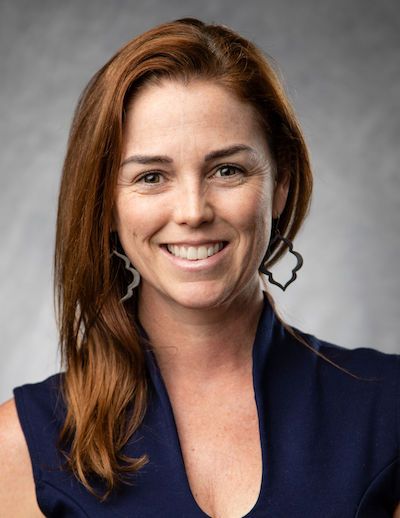
Erin Galyean is a speaker, trainer, and author. At 20 years old, while still in college, Erin’s father was diagnosed with Non-Hodgkin’s Lymphoma and passed away 10 months later. In 2017, Erin’s best friend and sister was diagnosed with a rare and aggressive lung disease, an auto-immune disorder, and Non-Hodgkin’s Lymphoma. During this time, she and her family advocated for her both in and out of the hospital. As her sister’s condition worsened, Erin realized that her knowledge and experience as a pharmaceutical sales trainer gave her a different perspective than most family members who care for a sick loved one. Since her sister’s passing in October of 2018, Erin has continued to advocate for patients and care partners alike through her book and journals to guide caregivers through the self-care routines, while her website and social media presence offer invaluable advice and resources, a testament to her mission to transform the landscape of caregiving and advocacy for our loved ones.
Transcript
[00:00:00] [Music]
[00:00:06] Dannelle: Hello and welcome to The Caregiving Soul. I’m Dannelle LeBlanc.
[00:00:12] A few months back, I had the opportunity to speak with Erin Galyean, speaker, trainer, and author of the book “The Badass Advocate: Becoming the Champion Your Seriously Ill Loved One Deserves”.
[00:00:29] This episode is particularly special, because it was The Caregiving Soul’s first ever live recording in front of an audience at Good Day’s annual Exchange Conference in Texas. A number of healthcare and caregiving advocates from across the country had the chance to listen to this conversation live and now we’re sharing it with you. We hope you enjoy!
Read More
[00:00:59] [Music Ends]
[00:01:00] Dannelle: Hi everybody. Thank you so much for being here. I am Dannelle LeBlanc and welcome to today’s episode of The Caregiving Soul. [Applause]
[00:01:15] I’d like to invite everyone to imagine what it would be like to travel to a foreign country that you’ve never been to before. You don’t speak the language. You don’t know the lay of the land. And, in many cases, let’s just say that you didn’t know what to pack and bring with you on this adventure to a place you’ve never been before.
[00:01:42] That is what caregiving can be like, and so that’s where Erin comes in and why we’re so happy to have her here today on The Caregiving Soul because she can help us to navigate what it’s like to go on this journey. And in your book, which we’ll talk about more today, it’s like a map for navigating a health care condition whether for yourself or for a loved one. And so, I’d like to start there, because you have walked this path, Erin, so can you tell us a little bit about how you got here as a patient advocate for people who are caring for themselves, or for a loved one with a health condition?
[00:02:31] Erin: Yeah, I’m so glad you said both categories –
[00:02:34] Dannelle: Yes.
[00:02:34] Erin: – because even if you’re not audience listening and you think, well, this doesn’t apply to me. It’s not relevant. It’s not true because as Rosalynn Carter says, there are four kinds of people in this world. Those who are caregivers, those who will be caregivers, those who have been caregivers, and those who will need a caregiver. So, it’s relevant to all of us, and it’s important to, to pay attention.
[00:02:54] So, my story starts with my father. My father was such a goofball. He loved dad jokes. He was the life of our household. Just a lot of fun, laid back, loving man. In 1997, he was diagnosed with non-Hodgkin’s lymphoma. And ten months later, he ended up passing away. At that age, I was 20, and my dad was just 53, so very young. And it was a hard time. I was away at college, so I wasn’t really involved in his care. My mom, who’s here today, was the one who was caring for him.
[00:03:26] My family was devastated, as you can imagine. I’m sure there are those of you in the audience who have lost a loved one, and it’s very difficult. I also have a brother and a sister, and over the next 20 years, we learned to grieve and get through that process. You never forget, you just learn to deal with losing someone who you love.
[00:03:45] Twenty years later, my sister Megan, she’s also my best friend, she was also diagnosed with non-Hodgkin’s lymphoma. Completely unrelated, unfortunately just a coincidence. The cancer that she got was actually the good kind, which I almost hate to say because there’s no good cancer, but if you’re going to get one that’s curable through chemotherapy, then they consider that kind of the good type of cancer.
[00:04:08] Well, that was the good news. The bad news was that she probably had cancer for about a year. It caused an autoimmune disease. The autoimmune disease caused a very rare and aggressive lung disease. The lung disease is really what took its toll on Megan’s body. And within 13 months, Megan passed away. She was just 47 years old.
[00:04:27] She had two young girls, was married, so it was a very tough road for us. And obviously we still miss her and my father greatly. Megan was a lot like my dad in that she was just, not a goofball, she does, she did like to scare you, so I have many scaring stories. If you want to talk about that tonight, I’ve got plenty of ideas of ways you can scare your kids, because my sister was the champion. But she just was, kind and loving and such a great older sister to me.
[00:04:52] During that time, I have been in the pharmaceutical industry for over 20 years, so I currently teach other sales reps how to speak to physicians, how to ask good questions. So, I’m very comfortable in that space. And it became really advantageous to me and my family because I knew what kinds of questions to ask.
[00:05:12] I wasn’t familiar with my sister’s disease, never heard of it. It’s called bronchiolitis obliterans. It’s a mouthful, but I knew how to ask good questions, and I knew that I needed to give pushback. I wasn’t intimidated to speak to physicians, which a lot of us are, understandably, right?
[00:05:28] And so, after she passed away, I decided I need to write a book and teach other families how to powerfully advocate for their loved one. Because this is something we all need, but as you said, we also need to advocate for ourselves. Sometimes it’s not as severe as Megan or my father’s journey. Sometimes it’s just going to the doctor.
[00:05:46] I can’t tell you how many people text me, my friends, and will say, “I’m so glad I read your book because I use this today at my primary care doctor”. Just little things of learning how to ask questions and advocate for yourself. Not because physicians don’t care. That’s not the message. It’s because they have many patients they’re caring for. You as an advocate have hopefully just one.
[00:06:06] Dannelle: And it’s so important to be able to understand, um, and create a bridge between the terminology that a health care provider might be using –
[00:06:16] Erin: Yes.
[00:06:17] Dannelle: – and the language that we use as a patient or as a family member who is advocating for our family member. And it’s not that one or the other is wrong or right. It’s just like I said, going to a different country where you don’t speak the language. It’s just different.
[00:06:36] And so, this experience has touched so many of our lives. Nobody goes around calling themselves a family caregiver. Who does that? Nobody does that. We call ourselves daughters, or sons, or spouses, or grandparents, or grandchildren, right?
[00:06:52] So, can you explain to us what the difference is, how you would describe that overlap? Just so that for us, again, the language that we’re using when we’re having these conversations, I think is important.
[00:07:04] Erin: Yeah, and I love that you said that about how we don’t identify as that because that’s what I have found. Since I wrote the book and I’m speaking to different caregivers or people, they just don’t even identify as a caregiver, especially, I think, a younger generation. And so, the way that I define it, it’s not official, it’s just the way that I looked at it, is my mom was the main caregiver. She took care of my sister and my father every day, the ins and the outs.
[00:07:27] I lived here in Texas, my mom and my sister lived in South Carolina, so that’s a big space. I wasn’t doing the day-to-day caregiving for her. Now when I would fly, I also had a two-year-old at the time when my sister was ill, so when I would fly there, I would take over some caregiving responsibilities. I still didn’t identify as a caregiver, but I did identify as an advocate because there was no way I was going to let anything go wrong with my sister.
[00:07:53] Even though she passed away that disease was out of my control, but what was in my control was asking good questions, fighting for her, not meaning we have to fight against doctors, but just having a voice because she didn’t have a voice, you know, at one point because she was so sick and had trouble breathing.
[00:08:10] So, you really need to be that person where you can speak up, and even if it’s uncomfortable, I was like, I’m going in here today, and I’m going to ask that question. And it’s going to be hard. and towards the end, when she was really ill, I had to ask some very uncomfortable questions for myself. Because I need to know, was my sister going to live or not? And I need to know how much time we had.
[00:08:30] No one wants to ask that question, believe me. I didn’t want to ask it, but I had learned from my father’s illness that I didn’t ask it then, and I wasn’t going to just shy away from it this time. I wanted to make informed decisions. And that’s why you have to ask the hard questions.
[00:08:44] Dannelle: Yes, being able to make informed decisions, because you also know what your loved one wants and needs when they can’t necessarily speak up for themselves, which is different from, so this little section in your book that I just want to call our attention to, which is about owning certain responsibilities. And you wrote, “when someone is sick, they may not have the energy for certain tasks, such as returning friends’ phone calls, paying bills, or tending to their yard. You don’t want to encourage a helpless mindset”.
[00:09:18] So, this isn’t about taking over somebody’s life or making decisions for them that they haven’t had an opportunity to make for themselves. But you continue to write, “but you can provide support by accomplishing tasks that aren’t critical to getting them back on their feet”.
[00:09:35] So, you share eight ways that we can impact quality of care. And the first is critical to how we manage the stress and responsibilities of caregiving, which is building our support team. Okay, so this is like one of those things where someone’s like, yeah, so we need to build your support team. And you’re like, what? Okay, thank you for that.
[00:09:57] Erin: [Laughs]
[00:09:57] Dannelle: What does that mean in real life?
[00:10:02] Erin: Right.
[00:10:03] Dannelle: So, can you please talk to us about what can a support team look like? And how can we identify sources of support during difficult times? Because part of the challenge when we’re an advocate for ourselves or for our loved one is we are already overwhelmed, okay? So, how do we do that when we have that overwhelm going on?
[00:10:28] Erin: Yeah, so there’s really three categories I put support teams in or caregiver situations. One is a family like mine where we were very close knit. We were there to support my sister. There’s about 5 to 10 of us on her support team. We didn’t call ourselves that. It just naturally happened. If you’re in that situation or you can identify with that, then you’re blessed because you have these people that are willing to step up and take charge or take over certain aspect of caregiving. That’s great.
[00:10:53] That’s a little bit easier than number two, where you do have a family and there’s many of you. And one of you will take over and nobody else will help and that’s really frustrating. And in that case, it’s almost like you need to lay out some responsibilities. Figure out what people’s strengths are. You probably know if they’re your family and your cousins or your friends. And figure out how they can play a role using their strengths. And I’ll talk about that in a minute.
[00:11:16] And then the third one is, some of you who don’t, who don’t have any family. No one close by, no one to help you really. It’s just maybe you and your significant other or maybe not even that. In that case, you really need to get creative. And same with number two, you need to get creative and think outside the box. So, with the second scenario and really all of them. Think about the strengths with the people that you know that can help.
[00:11:38] It can be as simple as, let’s say you have a niece or nephew who is a teenager. I have a teenager. What are they good at? Technology. Can they go and set up maybe a website to help the patient and get meals delivered, or maybe they need fundraising because healthcare is expensive. Simple things like that. It doesn’t have to be on you, the caregiver. Why do you have to do that? Get someone else who actually would enjoy doing it and would be good at it. It would take me a long time to figure that out. It’ll probably take them an hour, right?
[00:12:06] You could have, maybe there’s a neighbor that has a teenage son who can take the trash out for your mom or dad every Tuesday when it’s supposed to be pulled out. It’s something easy, but it relieves that responsibility. Or maybe it’s for yourself, because you’re battling something, and you don’t have the strength to do it. There’s little ways that you can have that support, and then there’s the bigger ways, right? Where you can use the people around you in a positive way where you can bring them in.
[00:12:32] So, let’s say you have a friend that is in healthcare. Can they come to an appointment with you to ask good questions? Maybe you are a little overwhelmed with the terminology. If you’re the patient or you’re the caregiver, it’s very overwhelming and confusing. And as you spoke about at the beginning, the jargon is really a lot to deal with. So, there’s different ways.
[00:12:52] And then the other one is taking advantage of people and organizations in the community, nonprofits, Good Days, and other nonprofits and organizations like church. So, my sister had some church ladies come by, they were retired, and they sat with my sister. So, think about this. We’ve got working adults who are caring for her, but we don’t know how long that road is. We have to work.
[00:13:15] And especially my sister’s husband had to bring home income and keep up with the insurance, right? This is real life. He can’t sit at home all day. And my mom would need a break even though she’s retired. She can’t be there every day. That’s exhausting.
[00:13:27] So, these church ladies will come over every so often and just sit with my sister. They didn’t have to do medical care at all. They weren’t responsible for that, but they could sit, and my sister might be resting. But they really helped us because if she got up and fell there’s an adult there to help or if she needed help to the bathroom or whatever it is.
[00:13:44] So, there’s so many ways you can have hired help, of course, if you can pay out of pocket, but there’s also free ways to take advantage of the community and your family and your friends. Most people want to help, they just don’t know what to do. There’s one of my favorites Brené Brown talks about, if you are judging yourself for asking for help, that means you’re also judging the people who are asking you for help. I’m not good at quoting people exactly, but it’s something like that and you get the picture.
[00:14:13] Don’t judge yourself. Don’t be afraid to ask for help. You need help. If you are the main caregiver, you need it. It’s not, it’s a requirement, don’t think of it as an option. It’s not an option. You need to bring people in. You cannot do it by yourself. You’re gonna overwhelm yourself and probably get burnout, and maybe even sick yourself.
[00:14:31] Dannelle: And I think we can both speak to this from firsthand experience. So again, going back to this idea of labels and knowing how we describe what it is that we’re doing as an advocate, or a caregiver is really critical. The reason why it’s critical is because that’s what connects you to resources.
[00:14:54] When you’re building your support team or you’re trying to figure out, okay, what are the questions that I need to, that I need to ask, and you’re doing your homework, you’re doing your research, it is important to help, know what search terms to use. So, if you are, for example, looking for a support group, if you look up patient advocate, advocacy or family caregiving support group and that’s what’s going to help to start to connect you to those types of, uh, resources to build your support team.
[00:15:28] Erin: And there’s so many out there since I’ve been, since I published the book in 2020, there are so many small companies, larger companies you probably have heard of, but there’s so many because they’re like me, they have a story like mine. They’ve experienced something traumatic, and then they decided something was missing in the community, and I’m gonna build it myself.
[00:15:46] Dannelle: Yes!
[00:15:47] Erin: And they are passionate, and they are empathetic, and compassionate. They’re wonderful. The other thing that I wanted to say is, that’s in the book, and it’s in the back of the book, is different roles people can play if they’re part of the support team. So, you can always flip to that part if you need some ideas of how people can help, besides the ones that I mentioned.
[00:16:04] But one thing that I did, because I lived here, and my sister was in South Carolina, is, you mentioned, it’s overwhelming when a lot of people are texting and calling the caregiver, the patient.
[00:16:14] And of course it’s loving and people want to know what’s going on. We love you. But it’s overwhelming on the receiving end sometimes. And so, I said to my mom and my brother and my sister, why don’t I take this off your plate? I’m in Texas. I’m not dealing with the day-to-day care. So, I told my sister, just to make her laugh, I called myself her VP of Communications. It was just, it was just for fun, because sometimes you need a laugh, right, when someone’s ill.
[00:16:37] Dannelle: Did you get yourself a name tag?
[00:16:39] Erin: No, but I should have!
[00:16:40] Dannelle: Yeah, you should have!
[00:16:40] Erin: Man, I missed that opportunity.
[00:16:41] Dannelle: Man, get yourself a name tag.
[00:16:43] Erin: That’s right, I did. I did need that. And so, what I did was, I sent, with her permission and my mom and my brothers, I sent our family, we have a huge Irish family, so I sent all of them a text message saying, listen, we love you and we love your support and we appreciate it and Megan appreciates it and so does my mom.
[00:17:00] If you want updates, please contact me. I’m not discouraging you from texting my mom or my sister or my brother. You can. In fact, I encourage you to. Just don’t expect a response. And I encourage my family, don’t worry about responding. And it was a lift off their shoulders. I don’t have to respond, but I can take in the love.
[00:17:20] And then on top of that, the day before my sister’s chemo, or the day of, I, I have like 29 first cousins on one side. I would, we have a group text, I know it’s crazy, and there’s about 20 girls. And we’re all in a group text, and I texted all of them, I said, “Hey, Megan needs some extra love and encouragement today, because she’s going to have a rough day.”
[00:17:38] She would get bombarded with, you got this, you’re awesome, you’re a warrior, all this stuff. And I don’t think she knew that I did that, which is great. And she’d text me like, I just got all these text messages, I feel ready to go in and fight. So, sometimes, you can play a role, and you don’t have to live down the street. You can really be impactful for your loved one and live halfway across the country.
[00:17:59] Dannelle: Okay, that is a great way to describe the role and the ways in which an advocate can support a loved one. Um, so, I want to follow up on this asking questions.
[00:18:15] Erin: Yeah!
[00:18:15] Dannelle: Okay? Because, this also came up in, in a couple different conversations that I’ve had with folks. I can’t really see y’all because the light is blinding me [Laughs] but I know you’re out there.
[00:18:29] But, this idea of asking questions of healthcare providers. We, depending on what your background is, you may know some of the questions to ask, but a lot of times we can’t anticipate what we need to get answers to until after the fact.
[00:18:47] Erin: Totally.
[00:18:47] Dannelle: So, can you talk to us about how we can better prepare to ask health care providers the kinds of questions that result in better care.
[00:18:58] Erin: Yes, so this is where my sales training came in handy. And this is also for yourself, even if you just have your yearly checkups. You can use this at any time.
[00:19:06] Number one, now this is a little extreme for your yearly checkup, but if you are, are taking care of someone else, brainstorm. Brainstorm with the patient. Do not leave them out of the conversation. I’ve made that mistake before. Brainstorm with your support team. And start thinking of questions you can ask.
[00:19:20] Maybe there’s an appointment with the oncologist, or whomever. Okay, what questions do we need answered? Start writing them down. And just make a list. It’s called a brain dump. Get it all out there. Then, start to go back through your questions.
[00:19:34] As salespeople, what we do is we ask questions, they fall in one of two categories. Some of you may know this. They’re either an open-ended question or a close-ended question. An open-ended question are questions that start with what, how, who, when, and that elicits more information from the listener, right?
[00:19:52] A lot of physicians have so much information in their brain, they’re not going to share it all because it is a lot. And they probably don’t think to. It’s unintentional. It’s not ill will or they’re trying to make it difficult for you. They just don’t think to show this information because it’s in their brain. So, you need to pull it out sometimes. And you can do that by asking open-ended questions. Things like, instead of saying, can my mom go for a walk?
[00:20:18] Ask a more broad question. What kind of exercise would be good for my mom? Well, now you’ve gone beyond just walking. Maybe there’s other things. Maybe she can do some leg exercises or whatever. If you say, can she go for a walk, the answer might be yes. Okay, great. That’s all I know. That’s the only piece of information I’ve gotten from that conversation. So, the other question I just asked, can I go for a walk, or can she go for a walk, is a close-ended question. They start with can, do, is, are. So, really crafting good questions –
[00:20:48] Dannelle: Right, yes.
[00:20:48] Erin: – is important. So, now go back to your list that you just brain dumped and look at all the ones that are closed ended questions and see if you can make them an open-ended question so you can get better information, more information.
[00:21:01] Now, on the fly, you will need some clarifying questions. This is where it gets a little challenging. So, what I tell my sales reps is when you ask a question, and the, and the doctor gives you a subjective answer, so something like, well, yes, she could walk longer, she could walk more often, what does that mean? What is more often to you or longer for me versus you?
[00:21:26] Dannelle: Right.
[00:21:26] Erin: It could be totally different.
[00:21:27] Dannelle: Yes.
[00:21:27] Erin: You may think a mile, I may think five.
[00:21:30] Dannelle: Yes.
[00:21:30] Erin: You could think five minutes, I could think ten. So, then clarify. Okay, so doctor, when you say she could walk longer or more often, what do you mean? Like three days a week? Five days a week? What does that mean for you? Okay? And so, you have to listen for those, those subjective answers.
[00:21:47] And then my other tip for asking powerful questions, and it kind of goes back to what you said, is if, once you get the permission of the patient and the doctor, ask them if you can record the conversation.
[00:21:58] As an advocate, this is the best thing I think that we did for my sister, because we weren’t all there, right? We had a support team of like five, seven people. We can’t all be in the room with her. And so, something that we would hear, we may not think of. The person with my sister may not have thought of it, right? Because you have a lot of information coming at you.
[00:22:18] Dannelle: Yes.
[00:22:18] Erin: But, for the next time you’re gonna speak to that physician and write better questions.
[00:22:24] Dannelle: Yes.
[00:22:25] Erin: And so, if you don’t think of something on the fly, it’s okay. It takes the pressure off. Okay, now I’m gonna maybe set up a call with them because I need answers faster, or I will use that information for the next time.
[00:22:36] Dannelle: That is a great idea and it’s much easier to do now than like when I was doing this, years and years ago, where you can just do it on your, do it on your phone.
[00:22:46] Erin: Exactly.
[00:22:46] Dannelle: And like you said, one of the biggest things, it takes the pressure off of having to focus on everything that a healthcare provider may be saying, all of the information that they’re giving you, and allows you to be more present for and with your loved one, which is really more important in that moment, and being able to provide –
[00:23:10] Erin: Absolutely.
[00:23:11] Dannelle: – that kind of support than being able to translate, in an instant, every medical term, or everything that you’re gonna need to do logistically in order to make sure that they have what they need from a medical standpoint.
[00:23:26] Erin: It serves several purposes that we didn’t think about. We were only thinking about the fact that, because I was here and they were in South Carolina, they started recording conversations because I was missing out on them, right? But then we realized there were other benefits that came from this, these recordings.
[00:23:41] Number one is coming up with, with questions that maybe missed or we realized you listen back to it and you catch things you didn’t catch. Like even if you were there, you go, oh, you know what? I didn’t even hear him say that. I, my brain went somewhere else.
[00:23:52] Dannelle: Right.
[00:23:52] Erin: Also, the other thing is that you can brainstorm as a team, and you may hear something completely different than what I hear.
[00:23:59] Dannelle: Right.
[00:24:00] Erin: That is really powerful because now we’re using different analytical skills and listening skills to advocate for one person. So, now your team is really supporting you as the patient.
[00:24:11] Dannelle: Yes.
[00:24:11] Erin: And they’re coming behind you just by listening to recording.
[00:24:14] Dannelle: Yes.
[00:24:15] Erin: And, and then sharing the recording with something that we could all use and go back to.
[00:24:20] So let’s say you had an appointment in October. And you had a follow up in December. You’re not going to remember what you talked about in October.
[00:24:27] Dannelle: Right.
[00:24:28] Erin: But you have a recording. You can go back and listen to it and say, oh yeah, I need to follow up with this because that never happened. Or we have an issue with that medication, and it was prescribed on that day.
[00:24:37] Dannelle: Right.
[00:24:38] Erin: I would just say, just make sure you get the permission of the patient.
[00:24:42] Dannelle: Absolutely. Yes. Required.
[00:24:43] Erin: And also, the physician.
[00:24:44] Dannelle: Yes.
[00:24:44] Erin: We never had an issue. I’ve given this advice to many, many people and I’ve only had one person tell me they had a doctor that gave pushback, and I would say if that happens, say, okay, you have your notebook and you should always have your notebook regardless cuz you may think of a question or something you want to write down in the moment.
[00:24:59] Still bring a notebook, but have your phone. Those recordings were so valuable. And now the extra bonuses, I also have my sister’s voice on recordings. So, I have gone back and listened to them. And that was another benefit I never thought of.
[00:25:11] Dannelle: Oh my God, yes. Okay, so in your book, Erin, you also share an effective routine that you call the five R’s, I want to make sure to get this out, to help caregivers balance self-care with care for those we love. Okay, so like you were talking about before, we can’t care for anybody, we can’t advocate for anybody, if we are about to fall out.
[00:25:35] Erin: That’s right.
[00:25:36] Dannelle: So, what are the five R’s? How can we use them?
[00:25:39] Erin: Yes, so this is really quick anyway, so we’re good.
[00:25:42] Dannelle: Okay.
[00:25:42] Erin: Number one – “Reflect”. So, these, this is like a morning routine. You can do it the night before, but if you’re a caregiver, I think this is really impactful. So, reflect upon your feelings. It’s that self-care piece, because you are dealing with a lot emotionally, physically maybe.
[00:25:57] And so, reflect upon your thoughts, your feelings. If you have a journal, I have journals too, that walk you through this, but you can write it down. And just think about what you’re going through, and do you need any other help?
[00:26:08] “Review” is review the notes. So, we just talked about a notebook. We talked about the recordings. Go back and review those. You don’t want to record that conversation and then forget about it. That’s not going to be really helpful.
[00:26:18] So, maybe you need to take a few minutes to listen again. What follow up needs to be made? What notes do you need to take? What questions do you need to write down? Review what is going on for that day too. If you have a calendar, does the patient have a doctor’s appointment. Do you need to pick up a medication for them. Just review that care.
[00:26:36] “Reexamine” is reexamine the patient’s care. This is, this could take a long time, this could take a short amount of time, it depends upon the situation and the day. But it could be something like, I’m going to reexamine that this medication doesn’t seem to be working for my loved one, or maybe yourself.
[00:26:52] And so, I need to have a, I need to make a phone call today, and I need to make an appointment. If you do this regularly, you’re going to stay on top of the patient’s care, and that’s the key, is to not let things just go by the wayside. Maybe make a note of it for a few weeks. I’m reexamining today that this medication doesn’t seem to be working, but they said wait two weeks. Then you’re tracking what’s going on, which is really important with healthcare, right?
[00:27:13] “Reevaluate”. So, reevaluate the support team. If this is a long-term illness, people get burnt out. It’s a lot. And maybe someone is struggling emotionally. It could be a child. Um, my sister had two young girls. They weren’t part of the support team, but they were a part of the team, of course. They’re part of their mom’s team. Do we need to reevaluate? How are they doing? Do they need counseling at school?
[00:27:36] Also, like my mom being the main caregiver, did she need a break? Could my brother come in, because he lived down the street, and fill in for her for the day, and take a day off of work? Think outside the box of how you can support one another.
[00:27:48] And then the last one is “Recharge”. And this is for yourself. So, recharge before you start the day. This could take all of 30 minutes, this whole process. That’s the goal, but we all know different situations may make it a little bit longer or even shorter. Recharge is about doing what you need to do to start the day feeling fresh and good.
[00:28:08] Whatever you need to do for yourself, go do that. Because your day is going to start, and we know as caregivers, it’s overwhelming. And then once the day starts, forget it. You don’t feel like you have any attention or time for yourself. So, just doing this morning routine should help you start off the day really strong.
[00:28:26] Dannelle: Yes, I love that so much. especially because it’s something that we can do wherever we are. We don’t have to go somewhere, or it doesn’t require any apparatus, or what have you. [Laughs]
[00:28:40] Erin: No, just do this at home.
[00:28:41] Dannelle: That’s stressful, you want something that’s simple. That can be contained within you internally, wherever you go.
[00:28:49] Erin: That’s right.
[00:28:49] Dannelle: And so, you have, your journal.
[00:28:52] Erin: The journal.
[00:28:52] Dannelle: Will you speak to that a little?
[00:28:53] Erin: Yeah, so the journal basically walks caregivers or patient advocates through this whole process. So, basically, I have a reflection question, so if you can come up with your own about how you’re feeling, I’ve got a different question for every day. It may challenge you some days. There may be some tears. There may be some laughter.
[00:29:10] There’s a whole area for the patient care plan and for you to just jot down your notes. And then, I have quotes, inspirational quotes, you can tell I like quotes, I’ve already used two today, and then reevaluate the team, you can do all that in the notes section. And then, recharge is the only one that’s not in there, because you have to go do it. So, you can shut the journal and go do whatever you need to do to care for yourself.
[00:29:29] Dannelle: I want to ask you, because the focus of this year’s exchange is “blessed are the ties that bind”, can you tell us how that has shown up for you in your life and your work as a patient advocate?
[00:29:42] Erin: Yeah, even though I would take back, of course, what happened to my sister, the blessing that has come after it is just, the people that I’ve met and really giving back to people and seeing the impact that I’ve helped other families. That’s all that I wanted. I wanted her legacy to live on and I feel good about what I did for my sister.
[00:30:01] Dannelle: Thank you so much for joining us today on The Caregiving Soul. Thank you guys so much [Applause] for being here. Thank you so much to the Empowered Us team.
[00:30:11] Erin: Thanks for having me. Thanks everyone.
[00:30:16] [Music]
[00:30:19] Dannelle: Thank you for joining our live conversation with Erin! To learn more about Erin’s work or to find out more about her books and journals, check out our show notes.
[00:30:34] Every episode of The Caregiving Soul has a page on empoweredus.org where you can find the extended show notes, including tips and takeaways, transcripts, and relevant resource links.
[00:30:47] For additional bonus content from this episode, and to connect with us, be sure to follow the Empowered Us social channels on Instagram @empoweredusnetwork and Twitter @empowereduspod.
[00:31:02] The Caregiving Soul is an Empowered Us original, presented by Good Days, hosted by me, Dannelle LeBlanc. If you liked this episode, be sure to rate and subscribe to the show wherever you get your podcasts.
[00:31:19] And remember, the right care includes care for you.
[00:31:30] [Music Ends]
Read Less
Recommended this Week

How to care for people with neurological diseases by putting the relationship first and speaking their “language”.

How to celebrate caregivers and navigate caregiving as a young adult.