




In this episode, Allie explores the complexities of accessing vital Social Security and disability benefits. In conversations with Social Security Disability attorney, Jacklyn Steinberg, they shed light on the critical distinctions between SSDI and SSI and highlight the significance of prompt filing and collecting robust medical evidence for your case. She also speaks with disability advocate Emilie Poteat, about her company Advocate, an innovative solution revolutionizing the disability benefits application process, ensuring timely support for individuals facing health challenges and income barriers.
*Note: At 00:10:32 Jacklyn mentions a “request for review” but the correct term is a “request for reconsideration”
Resources for Listeners
- To apply for SSI: Use the online tool to Get Started by requesting an appointment
OR call 1-800-772-1213 - Where to Apply for SSDI or SSI
- More about hiring a social security lawyer
- Where to find a social security lawyer:
- Contact your local Social Security office
- The National Organization of Social Security Claimants’ Representatives has an automated referral service 845-682-1881
- Online legal directories such as Avvo, FindLaw and Lawyers.com
- Medical Vocational Guidelines
- Adult Disability Checklist
- Empowered Us for more in-depth information and resources
Guest Links
- Jacklyn Steinberg:
- Website: SSA Lawyers P.A.
- LinkedIn: Jacklyn Steinberg
- Emilie Poteat:
- Website: Advocate
- LinkedIn: Emilie Poteat
- LinkedIn: Advocate
- Instagram: @ouradvocates
- Twitter: @EmiliePoteat
About Jacklyn Steinberg
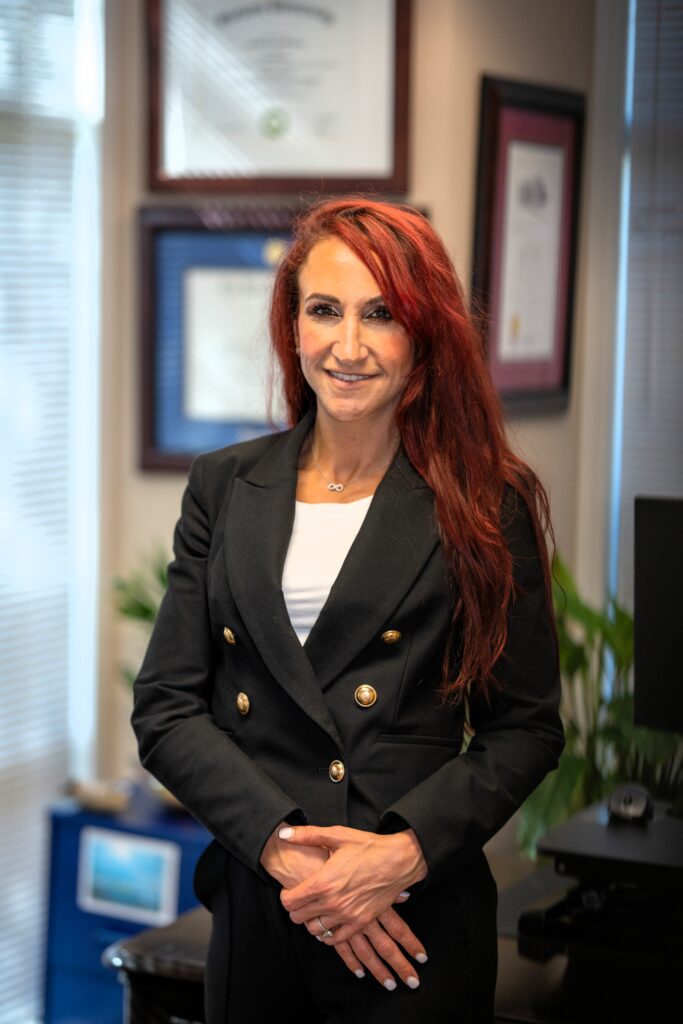
Jacklyn Steinberg is a highly skilled and experienced Social Security Disability attorney. She holds a B.A. from the University of Florida and attended Georgetown University’s capitol semester program in D.C. where she interned for Congressman Patrick Kennedy during proposal and passing of the groundbreaking Mental Health Parity and Addiction Equity Act (Federal Parity Law), which requires insurers to cover treatment for mental health and substance use disorders no more restrictively than treatment for illnesses of the body, such as diabetes and cancer. She graduated from Stetson University College of Law and is a partner at the firm of SSA Lawyers, P.A. She is a member of the Missouri Bar Association, American Bar Association, and the National Organization for Social Security Representatives.
About Emilie Poteat

Dr. Emilie Poteat is a sociologist, entrepreneur, venture capitalist and disability advocate. Emilie is currently the Founder and CEO of Advocate, a company that helps Americans easily access government benefits. She holds a PhD in Sociology from Boston College and has previously worked at Goldman Sachs and Bridgewater Associates. She and her wife, Nicole, have three children. They reside outside of New York City.
Blog Post
Navigating the intricacies of social security and healthcare when living with a chronic illness or disability can be challenging. Here we aim to provide clear information and valuable tips to help you access the support you need.
What is Social Security for Individuals with Disabilities?
Read More
In the United States, the Social Security Administration (SSA) is responsible for determining whether you qualify for disability benefits. These benefits are designed for individuals who are unable to work due to disabling health conditions. If you have a disability, being approved can provide financial stability, covering essential needs like housing, groceries, transportation, and medical care, which can improve the quality of your life.
There are two primary programs:
1. SSDI (Social Security Disability Insurance): This program is for individuals who have been part of the workforce and have contributed to the Federal Insurance Contribution Act (FICA) tax. Work credits matter, and the personal level of wealth and assets isn’t heavily considered.
2. SSI (Supplemental Security Income): SSI is based on your needs and circumstances, with no work requirement. There are thresholds regarding income and resources to qualify for SSI.
Unfortunately, the application process can be complex and time-consuming, with most cases initially denied. This process also generally takes up to 24 months.
Tips on How to Apply for SSDI and SSI
- Seek Legal Advice: Consult with a Social Security disability attorney. They can guide you through the process, increasing your chances of approval.
- Prioritize Medical Treatment Proof: Documenting your medical condition with strong medical evidence is crucial. Regularly visit your primary care physician and specialists. Lack of medical evidence can lead to denial.
- File Promptly: Don’t delay if you’re considering applying for benefits. Contact the Social Security Administration as soon as possible.
- Advocate is a technological solution aiming to streamline the application process for government benefits, starting with Social Security disability pay. This tool compiles vast amounts of data and simplifies the application process, democratizing access to government benefits.
What If Your SSDI or SSI Application Is Denied?
If your initial application is denied, you should appeal immediately.
The bar for approval is high, requiring you to prove you can’t perform any job in the country. Denial should not discourage you from appealing.
For more information please see our resources below.
Resources:
To apply for SSI: Use the online tool to Get Started by requesting an appointment
OR call 1-800-772-1213
- Social Security Administration
- Advocate
- Medical Vocational Guidelines
- Adult Disability Checklist
- Empowered Us for more in-depth information and resources
Read Less
Transcript
[00:00:00] [Music]
[00:00:03] Emilie: This is fundamental to who we are as people, how we live in the days of our lives that we have left, no matter if they’re filled with challenge and degrading health or if they’re filled with stability.
[00:00:16] Jacklyn: There are so many little things that social security does that can really hurt people in their cases. I think it feels good to know that someone is taking care of you, someone’s looking out for you. A compassionate attorney is a really important component and I think that’s something that you definitely want on your side when you’re applying.
Read More
[00:00:38] Allie: Living with a chronic illness or disability can pose unique challenges when it comes to navigating the world of full time employment. While many workplaces do their best to be accommodating, the reality is that the demands of the job may not always align with an employee’s specific medical needs. On top of managing their health conditions, many individuals find themselves grappling with the very real fear of not being able to sustain full time employment because of their health challenges.
[00:01:05] This situation can give rise to a multitude of issues. Beyond the desire to be a part of the workforce, which brings a sense of purpose and feeling of community, these individuals also face the practical challenges of not being able to earn a steady income or access company funded health insurance, both of which are essential for maintaining health and fulfilling their basic needs.
[00:01:30] So, what’s the solution for someone who genuinely can’t participate in the traditional workforce, but still needs a stable income?
[00:01:38] Hello and welcome to The Hidden Costs of Health. In this show, we’re exploring the burden of medical expenses in this country, and how a health event can quickly spiral into financial toxicity.
[00:01:51] I’m Allie Sandler, a producer for Empowered Us.
[00:01:54] [Music Ends]
[00:01:57] In the United States, we have the Social Security Administration, or SSA for short. They’re the ones in charge of figuring out if you’re medically eligible for disability benefits. It all boils down to your ability to work, or rather, your inability to work. Now, the Social Security Administration handles everything from Social Security cards, to taking care of retirement benefits, and, of course, disability benefits. It’s a government benefit we are all entitled to if and when we qualify.
[00:02:33] So, what are those qualifications? Well, if you’re an adult who is unable to keep working up until your full retirement age, because of a disabling health condition or conditions, and you meet certain work or income requirements as set by the SSA, you could be in line for disability benefits. It’s not just for adults, either. Certain benefits are also there for children with disabling health conditions, but their guardians need to meet certain income requirements to qualify.
[00:03:04] Now, here’s where it gets a bit more complex. There are two different programs for folks who can’t work anymore due to a disabling condition – SSDI and SSI. SSDI stands for Social Security Disability Insurance. If you’re a part of the workforce, you’ve been chipping into the FICA tax, which stands for the Federal Insurance Contribution Act. This tax acts as a safety net in case you ever need it, specifically for folks who have been paying into that tax and then are unable to work anymore.
[00:03:41] For SSI, which stands for Supplemental Security Income, there’s no work requirement. It’s about your needs and your circumstances. For SSDI, since you have paid into the system, the level of wealth and assets you personally have are not heavily taken into account. But for SSI, there are some thresholds when it comes to your income and resources.
[00:04:06] Now, [Music] if you feel like I’ve thrown a bunch of letters your way, you’re right. The process of figuring out if you qualify and what you may qualify for in the world of social security and disability payments can be quite complex. So, I wanted to talk to an expert to get a better understanding of the requirements.
[00:04:26] Jacklyn: I’m Jacklyn Steinberg, and I’m a social security disability attorney and partner at the law firm of SSA Lawyers PA in Tampa, Florida. And among other things, we handle social security cases from the administrative level up until the Supreme Court.
[00:04:44] [Music Ends]
[00:04:44] Allie: So, let’s start by talking about the first steps to filing for social security benefits.
[00:04:49] Jacklyn: The first step is filing the initial application, and that can be done by scheduling an appointment with social security to do that over the phone or submitting an application online. And the process can take quite a while. It can take up to 12 months for a case to go from the initial application to when it gets assigned to someone called an examiner. And then, usually about 60 to 90 days to get a decision after that, and that’s just the first initial application.
[00:05:20] Most cases do get denied at the initial stage, and that’s something important to keep in mind. Cases generally are going to get denied twice before they go to a hearing, and that’s when cases are approved. That’s when you’re before a judge, and you’re really given more time and more opportunity to discuss your medical conditions and how they affect your ability to work. So, from start to finish, I would allot for 24 months.
[00:05:48] Allie: 24 months is a long time. What’s the reason it takes so long?
[00:05:53] Jacklyn: According to social security, is they have a backlog of cases. There’s a lot of people that are applying and they’re understaffed and it’s just about the resources. You’re not doing anything for 12 months. Your case is just in a queue waiting to be assigned. So, it’s not there’s something going on during that time. It’s just the waiting process.
[00:06:15] Allie: So, if someone is waiting, what do you recommend they do?
[00:06:19] Jacklyn: The best thing you can do is focus on getting medical treatment, going to your primary, going to specialists. Medical evidence is number one when it comes to approving your disability. And if you don’t have enough medical evidence to support your case, it doesn’t matter how disabled, how severe your condition is, it is going to be very difficult to get approved. And it’s also important to keep in mind that you can save time on your end by filing right away. Do not delay. If you’re even considering filing, you should contact Social Security.
[00:06:58] Allie: What’s exactly the difference between SSI and SSDI?
[00:07:02] Jacklyn: SSI claims must be done over the phone, but you have to be ready to be on hold for 45 minutes. That’s just to schedule the appointment. They now claim to offer an option to schedule it online, but that is not very reliable. So, I wouldn’t count on that.
[00:07:19] You can file your SSDI claim online, but there’s just a lot of caveats here and it sounds self-serving, but there’s good reason to hire an attorney because specific dates can make a big difference in a case. And you’ve got to be careful with that when you’re doing it online on your own.
[00:07:36] With SSDI your payments can go back 12 months prior to the date that you first contact Social Security. SSI that clock starts the date that you contact social security, and if you wait, then that’s cutting into your back pay and SSDI is based on your work credits. So, as a rule of thumb, this is just to give some perspective.
[00:07:59] If you have worked and paid into social security 5 out of the last 10 years, then there’s a very good chance that you’re covered. But if you haven’t, then you might not be eligible. So, that’s something to keep in mind also with timing, if you wait too long, you could risk no longer being covered by your disability insurance.
[00:08:17] Allie: So, you’ve mentioned that you could apply for these benefits on your own. When do you recommend someone file on their own versus seeking help from an attorney or a social worker?
[00:08:26] Jacklyn: There’s very few cases that I would recommend someone just go ahead and file on their own. And I do tell people when they contact me, you don’t need an attorney. This is a kind of case that’s just going to get approved. And that’s if unfortunately, it’s terminal. If it’s a very, very severe condition, then I would recommend filing on your own.
[00:08:47] Aside from that, the reason for hiring an attorney is that it can be an extremely frustrating process. Communicating and dealing with Social Security contribute to the frustrations that someone’s already experiencing with their health. And this takes the burden off of them. At least I hope that that’s how most attorneys are.
[00:09:07] The other reason is that there’s so many gotchas with these Social Security cases. And if you don’t know about the specific dates or what they’re looking for, it doesn’t count as much. It could just, could end up resulting in a denial when it could have been approved, just by a small detail.
[00:09:28] Allie: As you’ve said, there’s a lot of times that applicants’ files aren’t approved. Can you talk about what someone should do if that happens?
[00:09:36] Jacklyn: If you get denied, really should not give that any weight and appeal it immediately. So, let’s say you want to try to go back to work, but you are worried because you have a case pending, and you want to know should I file the appeal if I want to try working? And the answer is yes, because the question is not whether or not you can do your past work or do most jobs, you have to prove that there is not one job in the country that you could perform.
[00:10:06] So, the bar is very high, but let’s say you want to try to, to work, but you just don’t know if you’re able to, there are opportunities to do that. So, if you worked for like three months while your claim was pending, but you ultimately weren’t able to keep up with the job requirements, you can still have a case pending. So really, there’s very few reasons why someone should not appeal.
[00:10:28] After the initial application is denied, you file something called a request for review. [NOTE: the correct term is “request for reconsideration”]. If that’s denied, you file a request for hearing before a judge. If the judge denies the case, but the judge made a legal error, then you can take that to the Appeals Council. If the Appeals Council sustains the judge’s decision, meaning they, they don’t see anything wrong with the way the decision was made, then you can take it to federal court.
[00:10:54] Once case is denied by the Appeals Council, you can file a new claim. You can also have a claim pending in federal court while you file a new one. So, that’s when you should consider filing a new claim. And I [Music] think that’s the biggest takeaway here, and that’s what I really try to be a voice for because there are so many little things that social security does that can really hurt people in their cases.
[00:11:18] The relevant question is, how does that medical condition prevent you from working? If you just rely on medical records and treatment notes, it might be futile. And that’s a shame because a lot of people will get denied just because they don’t know how to navigate the system.
[00:11:36] Allie: Jacklyn also told me that it’s important to debunk the misconception that a lack of resources is a huge obstacle. On top of advocating for her clients from the legal angle, she also assists individuals in finding other resources and solutions. There are specific and frustrating pitfalls in the SSI application process, which can result in a reduction of benefits. So, seeking the guidance of a professional may be the best way to ensure you’re effectively represented and advocated for.
[00:12:06] As Jacklyn mentioned, this process can be complicated for many reasons. The fact that you still have to call to access the initial SSI application in 2023 feels archaic, to say the least. While the traditional application process is possible for those who need benefits, there are also new solutions on the horizon to make applying for Social Security more accessible.
[00:12:32] Emilie: I’m Emilie and I founded a company called Advocate to help all Americans qualify for the federal government benefits they’re entitled to. And we’re specifically starting with the community of people who are living with disabling health conditions.
[00:12:48] Allie: Emily Poteat started Advocate after her stepfather had a terrible stroke and was unable to continue full time work after having worked for the past 38 years. She was a witness to the emotionally and financially stressful experience of getting him qualified for financial support.
[00:13:05] [Music Ends]
[00:13:05] Emilie: I’m a decision scientist. I’m a PhD sociologist by training and so, nothing more delightful to me than thinking in giant systems, wondering, “Hmm, is that real or is that just something a bunch of people got together and made up?” And figuring out how to navigate the individual through the bureaucracy that’s too hard for any one person to traverse on their own. And with Advocate, I took my one experience with my dad, determined if it was relatable to others. Turns out, unfortunately, it is and put my problem solving flavor towards it and the solution is a technological solution.
[00:13:44] Allie: So, how does the technology of Advocate work?
[00:13:47] Emilie: We’re going to develop technology that will face off to a number of government benefit types meant for people who are unable to work full time or apply themselves fully to wage labor in our society in America. First, we are starting with social security disability pay for worker and those who qualify for something called supplemental security income.
[00:14:07] In our system, we are amassing a huge data lake of case law. We are pulling in and making giant databases of all government regulation, procedural manuals, training manuals, and we are going to fast forward what I’d call case development to the very first moment that someone submits.
[00:14:31] What it means is if you have a specific back pain that you think is the most severe thing that bothers you from day to day, it may be the case that another health condition that you have, maybe a comorbid condition or something completely different, given who you are, what jobs you’ve had, your education, your age, and maybe that other piece to your health picture is what will qualify you for this benefit that allows people to have monthly income, to buy their groceries, to buy their prescriptions.
[00:15:02] And we are going to determine what is right for you today and push that process into a single moment using a system for the more clear-cut kind of cases first, then bridging up into more and more complex cases that have historically required an attorney or some of these nonprofit, like amazing social workers that just don’t have the capacity to scale like a system does.
[00:15:27] Allie: Wow, this seems like a complex task to take on. You’re not only compiling tons of data, but you’re also creating a disruptor on the government level. What made you think this was even possible?
[00:15:40] Emilie: It is an incredible surprise to me that this opportunity exists because it is so doable. It might be big and scary, and there are many steps and different motivations as you move through, but the reality is it takes over 200 days to have a case file reviewed, and that is an insane amount of time for someone to be without income. So, there are people just languishing out there.
[00:16:06] And when I looked with social security, what was going on was the exact same thing that had been going on 10 years ago, which was the exact same thing that had been going on 20 years ago, 30 years ago, 40 years ago. It’s in everyone’s interest and it’s like in keeping with who we are as Americans, I would say, that when you pay into something, you get those dollars back when you need them, when you’re qualified, that’s it.
[00:16:29] Allie: So, what’s the goal with Advocate, and how does it make applying for benefits more accessible?
[00:16:34] Emilie: What we are launching soon is what you would think of as a Turbo Tax experience where the person, their child, their friend, our advocates on our team, can go through and make representations about the individual’s health. We can pull in their medical records, do analysis on it.
[00:16:50] Or they can still call us up in more of the human-to-human way, but the big intervention that we’re working towards is not necessarily a digital front door or making a special app, but rather it’s our knowledge of what will win for who, when, where, and why on this program. And then the next program, and then the next one.
[00:17:10] And the reason why we think that’s the important focus area is we are aiming to democratize access to these government benefits because the odds are not quite equal. There are excellent advocates and excellent attorneys out there who can help people. There are some people who, who can’t quite find those. Maybe they’re not in their local area, maybe they select wrong. Maybe they, maybe they go on their own and they, they test it out. That disparate access to strong representation is why we’re focused in on systemizing that part of case logic.
[00:17:43] Allie: What are some of the impacts of being approved for benefits?
[00:17:46] Emilie: So, I think the impacts of being approved are very fundamental, so it’s not a supplemental benefit, it’s not extra. Let me talk about the worker pool. That pool is really money that anyone who’s paying taxes has put aside for themselves already.
[00:18:04] If they’re too sick to work any longer, there, there is the intention of that program that they’re able to draw from that pool. It’s an insurance policy that the government’s helping you save for. And so, when someone qualifies, they’re able to do very basic things – pay for their housing, pay for their groceries, pay for their transportation, and then access medical care.
[00:18:28] One of the things that I’m really focused on is while we can’t expand the quantity of days that somebody has, I believe the faster we put money in people’s pockets, we hopefully will be able to expand the quality of those days.
[00:18:47] If you aren’t capable of wage labor anymore, I believe our promise to each other in America is that if, either if you’ve paid in or if you’re in such a difficult spot that you need some base level of security and support, that we will give that and lend that to one another. And so, we’re just helping that promise come true faster. And I [Music] think it’s one we all hold in different ways.
[00:19:12] Allie: In the world of disability benefits, it’s crucial to understand that these programs are not just supplemental, but a fundamental part of ensuring stability for those who can’t work due to their health conditions. This support is meant to fulfill a promise we make to each other as a society, a safety net to provide basic needs like housing, groceries, and access to medical care. As Emilie mentioned, these benefits aren’t extras, but a lifeline for those facing debilitating health challenges.
[00:19:43] Navigating the complex system of social security and disability benefits often takes far too long to access this vital support. However, skilled attorneys and innovative solutions like Advocate are out there to ensure that those in need can access these government programs and provide everyone with an equal opportunity to secure the support they deserve.
[00:20:08] We understand that a lot of people learn in different forms, so there will be a corresponding blog to this episode where we fully define the terms and also provide different tips and resources, whether they were mentioned today or in addition to that. So, check it out on empoweredus.org. We’ll link it in the show notes.
[00:20:27] Also, if you found this episode to be informative and impactful, please share it with anyone else that you think may need to learn about this. It may fill in some of the gaps of their knowledge.
[00:20:37] We at Empowered Us are committed to advocating for affordable healthcare for all. We look forward to continuing these conversations with patients and experts to both educate and create new solutions. Let’s keep pushing for change together. Take care and see you next time.
[00:20:59] [Music Ends]
Read Less