




Monica speaks with Jen Hardy, an author, podcast host, blogger, coach, and mother. In this episode, Jen shares some of the technologies and apps she uses to help manage parenting, working, and day-to-day life while living with chronic illnesses.
“There were a lot of people complaining, ‘I’m so sick, I can’t get up’, but no one was saying, ‘how do you live your life like that? How do you get through it and live a good life, even when you’re like that?’. And so, I pursued it. I started a blog to help others like me.” – Jen Hardy
Timestamps
- 01:59 How Jen started blogging
- 04:29 Jen’s favorite apps and gadgets for parenting
- 07:26 Recommended apps and gadgets for sleep
- 10:39 How Jen works from bed
- 14:25 Apps and gadgets for brain fog
- 16:47 Robot vacuums
- 18:43 Kitchen gadgets
- 22:26 Other helpful gadgets
- 28:51 Jen’s ideal tech
Takeaway Learnings
-
Technology has the capacity to take on a lot of the parenting and home care exhaustion. From using home voice assistance, you can set up timers for when that dog needs to be walked, reminders of chores for the kids, and set up your device to be an intercom between rooms for additional communication.
-
Many simple tech purchases can make a huge difference: audiobooks, speaker pillows, and even automated potato peelers are little changes that could possibly elevate your lifestyle and reduce effort
-
There are a variety of apps programmed into your phone that can be so useful, such as the Notes and Reminders app for Apple users or for you Android users – Google Keep. Jen makes use of these to ensure that brain fog does not get in the way of her obligations and productivity
-
If you are looking to find a bedside setup that’s right for you, take a look into dorm rooms and tiny house setups for inspiration. These resources will show ideas of how to organize your small
Resources Mentioned in the Episode
Apps/Gadgets for parenting:
- Procreate: The app Monica mentions that she used with her kids to make glitter art projects online.
- Reading Eggs: The app Jen used to help her son learn to read.
- Apple HomePods: The intercom Jen’s family uses
Apps/Gadgets for parenting:
- Libby: A library app to borrow books or audiobooks with your local library membership. (this app is replacing Overdrive)
- Pillows with Built in Speakers (one example)
- Sleep masks with Built in Speakers (one example)
- AirPods Pro: The model that has noise cancellation, head tracking, and adaptive transparency.
- Bose Headphones: a list of their noise cancelling headphones
- Apple Beats Headphones: a list of their different models.
Apps/Gadgets for home:
- Whiteboards (One Example)
- Tech Whiteboard (One Example)
- Hospital Table (One Example)
- Microphone Arm for Desks (One Example)
- Desk organizer (One Example)
- USB desk fan (One Example)
Apps/Gadgets for Brain fog:
- “Reminders” and “Notes” apps on Apple products (or Google Keep for Android Users) – for grocery lists, doctors appointment notes, to get reminders when you are near a location, etc.
- Apple Watch: Jen uses it to check her oxygen level and oxygen saturation
Robot vacuums:
- Roomba: A list of the different models
- Neato: The vacuums that are square-shaped
- Robot Mops: A list of best options in 2022 by CNN
Kitchen gadgets:
- Monica’s Ninja Hot and Cold Blender
- Instant Pots: A list of best options in 2022 by CNET
- Potato Peeler (One Example)
- Tray that doesn’t spill (One Example)
- Toaster oven with door that raises to the top (One Example)
- Induction stoves with auto-shut off (or overheat protection) (One Example)
- Oven where you can see inside with an app (One Example)
Other helpful items:
- Smart lights: The brand that Jen uses.
- The Tile or Apple Air Tag to find your keys or other items (ex. Luggage)
- Toilet light: Similar to the one Jen uses.
- Adjustable beds: A list of the best of 2022 from sleepfoundation.org
- Adjustable bases: The affordable alternative to turn your bed into an adjustable bed
Guest Links
- Website: Hardy Mom
- Instagram Handle: @thejenhardy
- Facebook: @HardyMomPodcast
- LinkedIn: Jen Hardy
- Youtube: Hardy Mom
- Twitter: @thejenhardy, @HardyMomPodcast
Additional Resources
- Five Assistive Tech for People With Disabilities
- Accessibility in the Kitchen: Tips for Cooking, Prep and More: The Technically Sick episode with Kristen Lopez
More kitchen gadgets to help people with disabilities (and websites that have them):
- 8 Kitchen Aids
- Health Products for You
- Ability Superstore
- Bluetooth meat thermometer – a great resource recommended by one of our team members, this item allows you to be able to see the temperature of meat you are cooking on an app on your phone, so you can check from another room or bed.
About the Guest
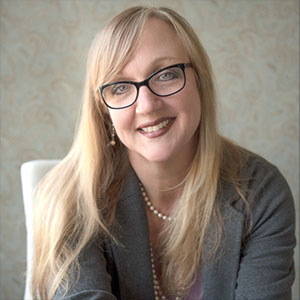
Jen Hardy is an author, podcast host, blogger, coach, and mother to seven children. In her work, she discusses what it’s like to be a mom and an entrepreneur while managing her chronic illnesses.
Transcript
[00:00:00] [Music]
[00:00:06] Jen: There’s a lot of people complaining, “I’m so sick, I can’t get up”, but no one was saying, “how do you live your life like that? How do you get through it and live a good life, even when you’re like that”. And so, I was pursuing it. I ended up starting a blog writing down this is how I get kids to clean up, and this is how I get my house to be done, in order to just help other moms be able to do the same kind of thing. So, instead of focusing on the negative part, you could actually look around and think, you know, I like my house now.
Read More
[00:00:36] Monica (Recorded): Hi. Welcome to Technically Sick. This podcast explores how technology can increase access to education, employment, transportation, and improve socialization for the disabled and chronic illness communities.
[00:00:50] I’m your host, Monica Michelle
[00:00:55] [Music Ends]
[00:00:55] Today I’ll be speaking with Jen Hardy – an author, podcast host, blogger, coach, [Laughs] and mother to seven children. In her work, she discusses what it’s like to be a mom and an entrepreneur while managing her chronic illnesses. Her tagline is one of my favorites, “I’m here to help you live the life of your dreams, even if you can’t get off of the couch”.
[00:01:20] In today’s episode, Jen and I will be discussing some of our favorite apps and devices that help manage parenting, working, and day to day life while having a chronic illness. I definitely recommend taking some notes, with the products that Jen mentions and how she uses tech that you might already own. We will also be providing links to any of the products mentioned in the episode show notes under resources.
[00:01:46] Please note that the products that we mention are tools that Jen and I find useful, but they are not sponsored or endorsed by the show.
[00:01:53] [Music]
[00:01:55] Welcome to Jen Hardy!
[00:01:59] [Music Ends]
[00:01:59] Monica: I’ve been really excited to talk to you because you go through a lot of things that I think a lot of the community deals with, and you have a really interesting focus on happiness and doing self-care through tech. And I really [Laughs] wanted to get into the weeds with that. You have a tagline that’s, “I’m here to help you live the life of your dreams, even if you can’t get off the couch”, and I really wanna dig into that. Can you tell me a little bit about what that means to you?
[00:02:21] Jen: Absolutely. So, when my middle son was six months old, right around ’99, it’s been a while, there was one time when he fell down and I literally couldn’t get off the couch. It makes me teary just to talk about it because that’s the first time it really hit me, like there is something wrong. The doctors kept saying I was fine, but if you can’t pick up your child, you know, you’re not fine. From then I kept getting worse, but I, I wasn’t able to really find help. How can you be a mom when you can’t get off the couch or whatever.
[00:02:48] And then in 2014, I spent six different weeks in the hospital. And then how do you parent from the bed? Right? The hospital bed? And so, I got my first tablet, and I was Googling all these things and there’s a lot of people complaining, you know, like, “I’m so sick, I can’t get up”, but no one was saying, “how do you live your life like that? How do you get through it and live well, not healthy maybe, but live a good life, even when you’re like that”. And so, I was pursuing it.
[00:03:15] My husband said, “you know, if you can’t find it, you need to create it. I really think it’s your job to create it. I ended up starting a blog and it was super ugly [Laughs] cuz I didn’t know what I was doing. I just started thinking, okay, what do I do? Because I have seven kids. I’m still getting a lot done, and how do I do that? So, I started writing down, you know, this is how I get kids to clean up, and this is how I get my house to be done, and, in order to just help other moms be able to do the same kind of thing.
[00:03:41] So, instead of focusing on the negative part, you could actually look around and think, you know, I like my house now. Cuz if your house isn’t peaceful, it’s hard to be peaceful and feel good. And there’s a lot of like old fashioned games we would play and different things so that when I felt really bad, I could still engage with my kids. So, that’s how it started.
[00:04:01] Monica: I absolutely hear that. I have, um, darling slug days with my youngest. I was very disabled by the time my littlest came around and we’d have days where we would do all the crafts in bed and to keep the mess down, we used a lot of apps, and it was hard because there’s a lot of the talk against screen time, but I found that there was so many really cool educational, fun apps, like, it’s a very badly named app, but Procreate was one of the favorite apps that we have in the house where we would just do these incredible glitter art projects on there that didn’t end up all over the bed. Did you have any like favorite things or gadgets or apps that really helped you parent from bed?
[00:04:35] Jen: Oh, my goodness. I’m gonna tell you I will second Procreate. And when my daughter told me that she wanted that, I was like, nope.
[00:04:41] Monica: [Laughs]
[00:04:43] Jen: I actually made a little cartoon on there. I made little birds flying and they said, I love you as they… yeah, that was so much fun. And that actually is one of the apps that we do together. And then, as a homeschooler, I was having a really hard time teaching my son to read, my last son. And I’ve always been of the “minimal screen time club”, but this last couple years, and then COVID right? I mean, how can you? Before, you could go to a play place and you could sit. Right? And they could be out there no matter what the weather, but we’ve lost that.
[00:05:13] So, he could not read, and I was going nuts because all my other kids could read, and we got Reading Eggs. It’s an app and it’s all these games and all these things. And my eight-year-old son went from like a kindergarten level to a second-grade level in like six months, or seven months, it was amazing. I would sit with him, and he would do that, and it was something I never would’ve thought I did, but it was just one of those tech things that worked.
[00:05:39] And another thing that we used that I know a lot of people don’t use it for this, but I had surgery a year and a half ago and I knew I wasn’t gonna be able to get up. And so, I bought a bunch of HomePods, like Apple HomePods, and we used those for intercoms. And so, if I’m not feeling well, instead of screaming, which A, we’re really trying to cut down on the amount of yelling in our house, [Laughs] but also, I had a hysterectomy and it was hard to yell. So. those things have been amazing because we like to sing together, so, you know, we can randomly play a song or whatever, but then we can talk back and forth when I can’t get up. So, that’s been really helpful.
[00:06:17] Monica: Have you found other uses for the HomePods? I use mine a lot for like, I have no attention span or memory, so [Laughs] I use it a lot for like, reminding myself to take my medication, or hey, you put something in the oven about three hours ago, you might wanna check on that. It’s burning down the house. I use it a lot for the kids to remind myself what chores I told them to do.
[00:06:38] I don’t know if you have this problem, but I often forget what I punish someone for, how long the punishment is supposed to go. I feel like I need a lawyer at all times. I have teenagers.
[00:06:46] Jen: You need contracts for everything. Yes.
[00:06:48] Monica: Is there some sort of app that we can get that would like actually hook into our calendars and just remind us when they’re, they’re done?
[00:06:55] Jen: That is a issue. So, I do forget things. So, what I’ve done, actually, is I set a timer in my kitchen to go off five times a day and that’s when they’re supposed to walk the dog and they hate the sound of that timer. And so, they’ll go crazy, but the dog needs to get walked. And I was really tired of saying all day, “walk the dog, walk the dog, walk the dog”. And so, now Siri tells them to walk the dog.
[00:07:17] Monica: I am a big fan of using technology to take on a lot of the parenting exhaustion [Laughs] and home care exhaustion that I have. Do you have any other tips for home care gadgets that you use?
[00:07:30] Jen: I also have a problem with my vision. So, I have muscular dystrophy and it affects my eye muscles. So, when I’m tired or I, if I do anything physical, my eyes don’t work. I have the biggest phone I could get. Right? And I make everything big. My older kids laugh at me, but, you know, it is what it is, so that I can see everything.
[00:07:47] I love listening to podcasts. If I wanna learn about something or hear something. I mean, I have a podcast obviously, but to me, podcasts are a really great way of learning new things when my eyes can’t even deal with a YouTube video. I listen to audiobooks a lot, every night, well to sleep. So, that’s a way I use tech to sleep. I have really bad insomnia. I’ve always been like that.
[00:08:09] I have about 20 books that I’ve listened to each one like 50 times. So, I generally know the story, so I don’t stay awake to hear the story, but it’s still interesting enough, like Pride and Prejudice. I feel like you can’t ever get enough of Pride and Prejudice. Am I right? In fact, that’s the one I’m listening to right now. It’s also a really long book, so it will last the whole three weeks. I can check it out from Overdrive.
[00:08:30] And there’s another thing is get a library card and Overdrive is going away, but they have Libby – and I’ll say I don’t like Libby as much as I like Overdrive, but I’m gonna get used to it – because you can get all these new great books for free. And three weeks is plenty of time. You can hear a book in three weeks. So, if you actually want to listen to every part you can listen during the day, have it on the background or whatever. And then it’s a really good way to sleep.
[00:08:53] Along that line, tech wise, they have pillows with speakers built in. So, if your spouse does not want to listen to your audio book at night, like mine doesn’t, and you don’t want a cord wrapped around your neck, they have these speakers and then when you lay on the pillow, you can hear it, but you can barely hear it
[00:09:08] Monica: That’s an interesting idea. I’ve seen that with sleep masks as well. They have the sleep masks that go around your ear that have the, I was desperately hoping that my AirPods would be sleepable. Cause I sleep next to someone who sounds something like Chewbacca with a breathing issue. And, [Laughs] I was really hoping that the noise canceling headphones would be sleepable and they aren’t. They do help during the day though. I don’t know about you but with attention span issues, and anyone who has neurodivergence, it can really help to have those noise cancelings on.
[00:09:35] Jen: Yeah, I have them because I have sensory issues as well, and I’ve found that they really help me relax if I’m out. The over the ear ones are better, but you know, you can’t always do those. And actually, Bose has noise canceling in your ear. And then I have the Apple Beats ones, cuz the actual AirPods, the hard thing, I can’t do those cuz they don’t feel good in my particular – I have little baby ears. I don’t know.
[00:09:58] Monica: I absolutely hear that. I do have them, but they don’t necessarily stay in perfectly. I just got the new ones because they’re supposed to help with hearing loss and transparency. I have some hearing loss in one of my ears. So, if you turn your head, it’s almost like a wearable, so you’ll be able to hear if there’s like a car horn, but you won’t hear the general noise and it’s supposed to isolate people’s voice, so if you’re like across from somebody, you can kind of turn your head and you know, if a teenager’s mumbling at you, and you kind of wanna hear what they have to say you can sort of like turn your head [Laughs] and get the full, full bit there.
[00:10:28] Jen: And that’s nice. Yeah, I’ve got a daughter who is completely deaf in one of her ears. So, that would be nice if she had that so she could hear, you know, if we were loud, but also cancel some of the things.
[00:10:39] Monica: You do a lot from bed and I am fascinated because I did a deep dive rabbit search on other disabled parents and business owners, how they set up their actual physical space next to their bed so they can continue. What’s yours look like, because I am always looking for new inspiration. I have peg boards everywhere. I have my tech all set up right next to me and it, it makes it look somewhat like a recording studio, a massive mess. What do you do? How do you get this all set up and organized?
[00:11:06] Jen: Oh, my goodness. First, I have to say that right now I’ve just moved it into my office, but once I have this I’ll go back and redo the part next to my bed, but I have a whiteboard next to my bed. I have to have a whiteboard. I have to have one in the kitchen and in my room. And I really would love to get one of those technological ones where it goes to your computer, but that is not in my budget right now. Cuz then it would just be everywhere, the same thing. Right?
[00:11:30] But a whiteboard is a non-negotiable for me in every space I’m gonna be in because of the brain fog, mostly, but also I really have to have a schedule. I do a lot better when I know what’s expected, from myself and from everyone else. That’s that. And then I have a hospital table that’s always next to my bed. So, the year I spent in and out of the hospital, we bought it on Amazon. It has lasted eight years now.
[00:11:52] It’s amazing, honestly, I don’t know how I could live without it. I really couldn’t. That would be my number one must-have: the rolling thing, it goes under the bed so the kids can sit next to me. We can put the iPad on it, watch a movie, we can play a game on it. You know, there’s all that.
[00:12:06] And then I have a boom arm for my microphone that screws into the hospital table and it screws into the opposite side for me so that I can pull it over. And that and my MacBook, that’s my recording studio, and I also have one of those little office, it’s got the little compartments, you know, it’s got a room for pens and a room for scissors and Post-it and all the things that you might need throughout the day organized because they were just thrown into the drawer.
[00:12:34] And I don’t like mess. I don’t know about for you. So, if I’m feeling good and calm, everything’s organized, like you can see behind me. This is my studio.
[00:12:41] Monica: Beautiful.
[00:12:42] Jen: Thank you. Like every book is aligned. Everything is perfect. No one’s allowed to dump things here, but the rest of my house does not look like that, because when I’m stressed, my house is messy, but then the mess makes me more stressed, and it’s this cycle.
[00:12:56] And it’s not until, unfortunately, I get really angry and let everyone know, in not the kindest voice, that we’re not living in this. And then they clean it up because we have to do it together, and then I feel better, but I wish we wouldn’t have to do this cycle, you know.
[00:13:11] Monica: I will need to have a part two with you to talk about the emotional side, and [Laughs] we’re staying on tech right now, but I want to dig into that. We actually bought a laser cutter here at our house with a 3D printer so that I could actually create organizational structures that would work in small spaces. I started looking at like dorm rooms for inspiration and tiny houses. It was really helpful.
[00:13:32] Jen: Actually, that is where I got my inspiration for my bedside thing, because yeah, it’s a small space and you need to put everything there.
[00:13:37] Monica: It’s so true and like the tables – they’re getting really cool now with like cup holders, and mine has like a little USB port. It’s getting closer to menopause, so it’s really nice to have that little USB fan going all the time. Really enjoying that little fan. [Laughs]
[00:13:49] Jen: Having the little plug in something in your desk or in that hospital desk, whatever, it is worth the extra little bit of money that you’re gonna spend on that because you have tech. Give yourself a space to have the plug, cuz those cords are a pain.
[00:14:03] Monica: It’s so funny because I think that, there’s a huge tax on disability because everything we get has to be the highest level of that product, because it has – what’s a convenience feature for other people is a necessity for us. If I reach down to try to mess with the plug, I’m going to dislocate. It’s just one of those things that’s, it’s not a convenience. It’s an absolute must have. It’s a little frustrating sometimes. [Laughs]
[00:14:25] But going to brain fog, I was wondering what you do? Like I use a lot of the notes apps, the Reminders apps. What do you do?
[00:14:33] Jen: I am all Apple everything because it’s all linked, because Apple’s more expensive, it was harder. But like you were saying, like, it’s the tax you pay to make it workable. So, I needed everything workable. I needed to be able to be in my office or be in my bed and have it flow. I have a Mac here. I have a MacBook in my bed area.
[00:14:52] And the watch – I’m telling you what I could not live without the watch, because I have breathing problems and heart problems. So, that’s helping me know like, how is my breathing? How is my oxygen saturation? You know, am I about to have a heart attack? We need to know these things, And it’s more than convenience. It’s the same thing though, I couldn’t get the base watch. Right? Cuz then you don’t have those features. But for me, I can’t even imagine not living with my watch again.
[00:15:15] And the Notes. My daughter writes, she’s 13, but she started like 20 books. She is a phenomenal writer and one of the books she started was in notes and she deleted the note, and you can’t get notes back. And so, I thought, oh my goodness, I did not know that. So, I went and copied every one of my 160 apple notes into 70,000 words in a Pages document.
[00:15:40] Monica: Oh, my goodness.
[00:15:41] Jen: So, I definitely use Notes. Notes is my go-to thing. And I have a separate note for every single thing. And then I can just search, the title or whatever, and it comes up. But in fact, the notes about talking to you or in Notes. [Laughs] It’s what I’m looking at right now.
[00:15:56] Monica: One of the things I’m loving is they just updated it, so now you get hashtags on the notes, so you can hashtag it. I use my Notes during doctor’s appointments all the time, because it’s very hard for me to get all the information they’re saying. So, I take shorthand notes through that and then I can hashtag it – which doctor and which specialist that was [Laughs] for whatever it was. My other favorites are Reminders on that suite. I don’t know if you use –
[00:16:17] Jen: Yes.
[00:16:18] Monica: – Apple Reminders, [Laughs] but the shopping list I can share with my husband.
[00:16:22] Jen: Well, and I like it, cuz I can just say, you know, remind me at such and such a time and you can give a longer thing than just setting a timer on that too.
[00:16:29] Monica: And it can also tell you when you get to a location, which was really helpful, like when I was trying to remember my passport and I don’t leave the house very often, that if I get near where the passport office was, it would like show up as a notification on my phone. Like, this is brilliant. Someone understands brain fog.
[00:16:43] Jen: I just learned something new today. That is amazing. I love that.
[00:16:47] Monica: Something that I am desperate for, and it’s really frustrating cuz there’s a lot of like consumer reports, Good Housekeeping. There’s a lot of magazines that keep track of home technology, but none of them look at it through a disabled lens. And you talked about robot vacuum cleaners.
[00:17:01] Jen: Yes.
[00:17:02] Monica: Do you have a favorite? I love them. They break on me all the time, but I have two dogs that shed off an entire other dog every day. What do you use? [Laughs] Can you give me advice?
[00:17:13] Jen: Okay, so we call ours Rosie, like the Jetsons.
[00:17:16] Monica: Yes. [Laughs] I love it. We call ours Kryten or Red Dwarf.
[00:17:20] Jen: I love it. I have a Roomba®. I had a nice, more expensive Roomba® and it was wonderful. And then it died. So, I got the cheap Roomba® don’t do that. Just don’t even bother.
[00:17:32] Monica: Good to know.
[00:17:32] Jen: Do not waste your money.
[00:17:33] Monica: [Laughs]
[00:17:34] Jen: Because I mean, the cheap one is still $200. Right? But it’s really like a piece of garbage. I just paid $200 for garbage. The other one had been one of the better ones. My daughter and son-in-law have a square one, it starts with a N.
[00:17:47] Monica: Oh, the Neato? The one that does a mop as well?
[00:17:50] Jen: Yeah, so it wasn’t a mop when they got it, they just got the vacuum and they also got the mop for a different house. They like the Neato and it has, it’s square, so it can completely get into corners. Although the Roomba® has the little brush, but if you’re really worried about detailed corners, not as much. I would love the one that you could do, like in the bathroom floor. Oh my gosh. The mop one. I think that would be phenomenal.
[00:18:10] But for me, just being able to touch an app on my phone and have it vacuum, I mean, because I just can’t, cuz I’m missing a lot of the muscles in my lower back, so I shouldn’t even be able to sit up and walk, but I can, but I can’t bend. If I bend, I’m going, all the way. The vacuum is wonderful, but just spend the extra money.
[00:18:29] Monica: It feels like there’s so many like great gadgets and apps right now that are doing the self-care for us and doing so much incredible care. There’s a lot of smart home that’s now for like aging in place, which is brilliant for all of us disabled people who are disabling in place. Do you have any like kitchen stuff to help feed that you love? I have the whole Ninja suite that I’m addicted to.
[00:18:49] Jen: I hate cooking. I really hate it with a fiery passion. My husband does a lot of that, but he’s a hundred percent disabled veteran, so he has issues too. So, he loves the Instapot. That is his thing. But let me tell you about my favorite, favorite of all time, kitchen gadget. It’s a potato peeler.
[00:19:03] You put it on the thing and it spins the potato and peels it, because if you have a hard time working with your hands, that was the thing, everybody wanted potatoes and I’m like, well, you’re getting ’em out of a box cuz I can’t peel them. And then I bought this thing, and it changed my life. So, like little $10 thing on Amazon.
[00:19:23] Monica: Isn’t it funny that some of the things that work the best are like these little like, what is this? Even for like, there’s a lot of stuff I wanna try as well. There’s all those gadgets like, I really wanted that tray that, it like centrifuge, does not like spill anything. That would be brilliant.
[00:19:37] Jen: See, that would be nice. Well, and I’ll tell you another thing that we got that some people might not, I don’t care about, but for us, it’s a toaster oven, but the door opens from the bottom, and it opens up, so that when you go to get your food, you’re not reaching over a hot door.
[00:19:53] So, if you have tremors or sometimes your hands move where you don’t want them to move, if you’re getting something outta that regular toaster and your hand goes down, you’re gonna hit that hot door and get burned. But this one goes totally up over the top. That’s another thing where it seems silly to most people, but I haven’t got burned on it ever, and we’ve had it for two years now. So that is an amazing thing. Our smart lights – game changer.
[00:20:17] Monica: Oh, tell me about that. How’s that working for you, and what do you use it for?
[00:20:21] Jen: We just started in our bedroom so that I have lights to lay down. And then once I lay down, I just hit the app. We use – it’s F-E-I-T. A lot of people don’t like them, but they frequently have them half price at Costco. And that’s why we get them because we can afford them. But for us, they work fine, but they’re color changing, and they do all these things. You can dim them if you want, which is nice if my husband wants to sleep and I wanna stay up.
[00:20:45] But mostly – because when we go to bed, he never turns his light off. And he has a CPAP, and I have a BIPAP, and I get my mask on and I lay down and I’m like, light is on, but we also have them now all over so we can get all settled. And then if we hear something outside, we can hit a button, turn on the light do all that. And it’s just been really nice.
[00:21:06] Monica: And there’s so many features for the home that just didn’t exist before. My mom had brought up, like if you had had this in the seventies, your life wouldn’t look like this. I’m like, you’re right. I get to basically have a smart home that does a lot of stuff for me. And I can run a podcast from home. My child gets to go to school at home. Like it’s really an incredible experience.
[00:21:27] It’s what I love about technology is it’s an equalizer in a lot of ways. If it can be afforded, it can give us a huge leg up. But like when we’re talking about the kitchens, I was looking to get a new stove and the inductions are amazing. Like the idea is I have a gas stove and I cannot tell you how many times I’ve forgotten that the gas stove was on, and the burners were still going. And this thing just will turn itself off. Or you can check your food from your bed. Like you could just like open up the app and see if your food is done. I love my family, but they don’t understand brown versus charcoal.
[00:21:58] Jen: Yeah. See that’s next on my wish list is that stove. I actually caught my kitchen on fire, because brain fog and hot oil. I’m not allowed to leave the kitchen when I’m cooking anymore. [Laughs] We’re very lucky. It just stayed in one little spot, but, yeah, no, those induction stoves are amazing.
[00:22:14] And the fact that if you accidentally leave it on, your kids aren’t getting burned, you know, nothing’s happening, I think that’s amazing. We’ve done our fair share of research and I cannot wait. I just cannot wait for that to come out. I think it’s so awesome.
[00:22:26] Monica: I don’t know about how you feel about it, but I feel an incredible loss of autonomy with my disability. And that’s been the most frustrating thing is now I have rules that I haven’t had since I was 10. Like you cannot cook if no one’s home. I can’t drive anymore. The Apple watch was completely bought for the ability to have autonomy because I faint. My husband found me after a few hours because we have a hundred- and five-pound dog that was laying across me since I don’t stand well, he decided –
[00:22:49] Jen: Aww.
[00:22:50] Monica – human stay down. It feels like these technologies are giving us a little bit more freedom. Is there anything that you use to get a little bit more autonomy or freedom in your life, or even like for cars? I’m so amazed with the new tech in cars to let us disabled people who can’t turn our heads very far, still be able to find if someone’s in the blind spot.
[00:23:09] Jen: Oh, my goodness. Yes. So, we have the blind spot things, and right now I’m the only one who can drive in my family. My husband was my caregiver and then he got really sick in January, and I had thought that I had gotten so much better and I was doing so good until he stopped being able to do almost everything, and I realized he was just filling in my gaps. So, what you’re talking about is really resonating, because right now I’m realizing I wasn’t that much better as I thought. [Laughs]
[00:23:35] I’m still trying to really figure out and I tell you, you know, one of the things that is my biggest thing is my tablet. And I know too, a lot of people are like, oh yeah, whatever a tablet. But for me, my muscles are so weak that, when I’m in the hospital, I can’t hold a laptop in my lap and move it around, I can’t. Even in the bed, it’s really awkward for me. And it’s hard. And so, just having my tablet and being able to lay in bed and have a window to the outside world, you know.
[00:24:00] I mean, it sounds silly, but it’s true because the TV, I can’t see, I can see things a certain distance close up and then very far away, but there’s a middle ground. I can’t see a TV in a normal TV space. It’s given me that freedom to be included, I think, with everything that’s going on out there and to be able to stay caught up with everything. That is, I think, my one thing, I’m just so thankful. Well, my watch and my phone and my tablet all together, I guess and the flow, just the flow of them, that if I remember something when I’m watching, I can put it on my Notes on my tablet, and then set reminders. I’ll do it sometimes on my watch and my phone, so that in case I leave one behind.
[00:24:39] Monica: They’ve been doing so much. I feel like Apple has someone on their team – and this is not an Apple ad. We are not sponsored by Apple –
[00:24:45] Jen: No, absolutely not.
[00:24:47] Monica: I feel like it’s tech for people who don’t understand tech and I deeply appreciate that aspect, but someone up there gets brain fog because I always leave my little AirPod case behind, and now the new AirPod case will make noise, and thank you. [Laughs] Thank you, you get me, you understand that I cannot remember where anything is. That’s lovely. And I don’t know if you’ve updated to the new iOS, but there was a lot of things in iOS 16 for disability, like the speech to text got really good.
[00:25:15] Jen: Yes, it did. I was so impressed because I don’t. Okay, so another thing, I have neuropathy and I’ve never met anyone else with the same problem, but touch screens burn my fingers. I can’t do much in the way of texting, so I always voice text and yes, that new update was phenomenal. And you know, another thing about brain fog, I got the thing to put on my key ring so that I can track it.
[00:25:36] Monica: Oh, the Tile, right?
[00:25:38] Jen: Oh, my gosh. Well, it’s the Apple version, but yes, you could get a Tile, so we can sell something that’s not Apple. No, but –
[00:25:43] Monica: [Laughs]
[00:25:44] Jen: – anything like that. Right? But, the thing is, it beeps when it’s away from my phone, so I know, hey, you’ve left this behind because I have a push button start. I don’t need keys. So, I keep ’em in my purse. So that way, if I leave my purse behind, it’s nice to know like, hey, go back to the house, and get your thing. But also, I can beep it. So, not only can I find my keys, but I can find my purse. You know when you’re in that, oh, we’ve gotta go. We’ve gotta go? And my purse got set somewhere, now I can find it.
[00:26:10] Monica: I, it’s not a tech thing, but right by the door is where I keep everything. I keep my just daily bag, which has to have all my medication, and all the KT Tape and everything. And I have a hook and it just, the second I leave, it gets grabbed. The second I come home, it gets put down and we have like my wheelchair stuff right next to it, so we can just grab this big box of stuff [Laughs] with us. It’s nuts, but it does seem to work a little bit.
[00:26:35] Jen: Yeah, I definitely need a purse place. I don’t have a purse place right now. And I think that is my problem. Everything else has a place. There’s two more things that I didn’t talk about tech-wise that I use. One of them sounds so silly. Okay. It’s a toilet light and it’s the silliest thing, but you put it on, and it only comes on at night, and when the lid’s up it’s red, but when you put the lid down, it’s green. So, if a man in your house gets up in the middle of the night and does their thing and leaves the lid up and you don’t wanna turn the light on, you don’t fall into the toilet.
[00:27:06] Monica: That is a warm and fuzzy experience.
[00:27:08] Jen: I tell you what, then you don’t have to turn on a light, because it’s just enough to go into the bathroom because I don’t know about you, but I have light sensitivity. And so, if I have to flip that bathroom switch on, it wakes me up, and then I’m up for a little while, but it hurts my eyes. It’s called Mr. Winkie. It’s so funny. I think that that is one of the best little inventions. And then we also have an adjustable bed.
[00:27:29] Monica: Oh, my gosh, heaven.
[00:27:31] Jen: That’s been a life saver. We have two twin XL’s, cuz we have it split. And so, my husband, he had knee surgery. He could put his feet up, but I didn’t want my feet up. And then I have a hard time breathing at night, so I put my head up and then when I can’t sleep, I have Parkinson’s symptoms, but technically not Parkinson’s. I don’t know, my muscles do these weird things, but the bed has vibration on it. And for some reason that tricks my brain into thinking my body’s already moving, so it doesn’t need to send those things to make my muscles move and tighten up. It just calms my muscles down. It’s amazing.
[00:28:04] Monica: I cannot live without mine. I have POTS and the zero gravity is –
[00:28:08] Jen: Oh.
[00:28:08] Monica: – fantastic to like keep the blood where it needs to go and keep the back from spasming. Oh my God. [Laughs]
[00:28:15] Jen: Well, and then when you go back down from that zero gravity, your back just feels so good. I mean, there’s just so many great things that come from that. And technically you can, like if someone has just a regular mattress, they could even get the adjustable bottom part and not spend the money on the whole thing.
[00:28:31] Monica: That’s what I have. I couldn’t afford the whole thing, so I just got the bottom part.
[00:28:35] Jen: Yeah. Because I think a lot of people assume, oh, I’d have to go get the whole shebang and you don’t. You absolutely don’t. In fact, we went to Sleep Number last week, cuz we were like, okay, we’re just gonna spend the money, we’re having a hard time sleeping. And we like our bed better. [Laughs] We’re sticking with our bed.
[00:28:49] Monica: I so hear that. I would keep you forever talking about gadgets and things, but I just wanted to ask you, it’s my favorite question, what you would like in the future? It doesn’t have to even be close. It could be as Jetsons or as Star Trek as you like, what is the thing that would just be amazing if you could snap your fingers and make it be a thing?
[00:29:07] Jen: It’s my robot that folds the laundry and does the dishes, absolutely.
[00:29:12] Monica: You need Rosie.
[00:29:13] Jen: I need Rosie. I keep watching, the robots are getting clo- you know, it’s scary and wonderful at the same time, but I’ve got to have those dishes washed, number one, and then the clothes folded. That’s it.
[00:29:23] Monica: I feel like there’s almost a level of privilege to the people who are scared of the robot uprising. I’m like, I get it, I hear you, but, oh my gosh, do you know what this could do for my life? [Laughs]
[00:39:31] Jen: Right?
[00:29:32] Monica: It’s the same thing with the self-driving cars and like, oh, there’s a privilege level to be able to be like, I mean, I’m scared. Don’t get me wrong. I’m scared, but wow. That would be amazing.
[00:29:40] Jen: Well, yeah, because that gives you more autonomy. You can get up and you can go, and you can do what you want when you want.
[00:29:44] Monica: That what you just said right there, that one sentence – to be able to do what you want, when you want – that freedom that we dreamed of as children, and then [Laughs] it got yanked away as adults. That sentence is a really important one.
[00:29:56] Jen: It is.
[00:29:57] Monica: Well, thank you.
[00:29:58] Jen: You’re welcome. Thank you so much for having me. This has been, amazing.
[00:30:01] [Music]
[00:30:04] Monica (Recorded): Thanks for listening to my conversation with Jen Hardy. So many of the small tech upgrades Jen has made in her life have allowed her to have increased autonomy, even when she has to work from bad. From using apps, to doing crafts with her children, to having a bedside podcasting set up to ensure that she gets her episodes released, her creativity in using technology shows that anything is possible. I really hope that some of these ideas we share in the episode are helpful for you or for people that you might know that could benefit from additional support through technology.
[00:30:43] The takeaway learnings and actionable tips from this episode are:
[00:30:47] 1) Technology has the capacity to take on a lot of the parenting and home care exhaustion. From using home voice assistance, you can set up timers for when that dog needs to be walked, reminders of chores for the kids, and set up your device to be an intercom between rooms for additional communication.
[00:31:07] 2) Many simple tech purchases can make a huge difference: audiobooks, speaker pillows, and even automated potato peelers are little changes that could possibly elevate your lifestyle and reduce effort
[00:31:24] 3) There are a variety of apps programmed into your phone that can be so useful, such as the Notes and Reminders app for Apple users or for you Android users – Google Keep. Jen makes use of these to ensure that brain fog does not get in the way of her obligations and productivity
[00:31:44] 4) If you are looking to find a bedside setup that’s right for you, take a look into dorm rooms and tiny house setups for inspiration. These resources will show ideas of how to organize your small working spaces in creative ways.
[00:32:02] If you’re interested in any of the tech that we mentioned, check out our show notes. All the products will be linked in the resources. These are products that Jen and I love, however, they do not sponsor our show in any way. For more information on Jen, check out our show notes
[00:32:24] Every episode of Technically Sick has a page on empoweredus.org, where you can find extended show notes, including tips and takeaways, transcripts and relevant resource links.
[00:32:36] If you would like to share your own tips related to this topic, or just to connect with us, visit the Empowered Us contact page or reach out to us on our social channels.
[00:32:47] Technically Sick is an Empowered Us original, presented by Good Days, hosted by me, Monica Michelle. If you like this episode, be sure to rate and subscribe to our show, wherever you get your podcasts.
[00:33:06] [Music Ends]
Read Less
Recommended this Week

How kitchen and household technology can help us save energy and prepare meals independently.

How technology can a pathway to change for students with disabilities in collegiate and other educational settings.